Tuesday, June 3, 2008

Wednesday, May 21, 2008

Artist David Capra interviewed in Blanket Magazine's collection issue:
"A lot of my work is a result of collecting... I prefer to work this way as I can put down various unrelated things together on the one page and watch them create a dialogue between one another... Since an early age I have collected various things, like a strange coping mechanism, it gives me a sense of accomplishment when I look at what I have gathered together and life then feels more manageable."
Saturday, May 17, 2008
collecting ideas on collecting


Blogging:
What are these sort of websites, really, but a modern form of collection? The ideas of others are gathered into a cohesive stream (linear, chronologically arranged) and shared expressively. Essentially, a lovely contemporary evolution of the humble scrapbook.
Monday, May 12, 2008
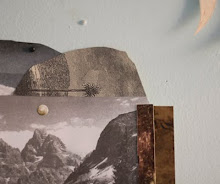
I've been thinking recently about the process of collaging being another form of collecting (ie gathering and arranging 2D imagery on a page) - it's a form which illicits a more specific narrative. This is a nice example of that.
Sunday, April 20, 2008
the owls are watching


I had a tip-off from Marilyn about a bookshop on Swanston St which specializes in rare and antique books, but more interestingly also houses amongst them hundreds and hundreds of owls. When I asked about their story, I was told the owner was once given an owl years ago and then "people just kept giving them to her. They also happen to go well with the books."
Monday, April 14, 2008
Judith Pascoe wrote a fascinating little book called The Hummingbird Cabinet - A Rare and Curious History of Romantic Collectors. The section detailing the passionate collecting of hummingbirds in the early 1800s emphasizes how much the nature of display provides insight into the intentions and sentiments which drive the pursuit of a collection. In the context of the London Natural History museum, Pascoe details a contrast in the museum's modern purposes and those of the hummingbird display:
The hummingbird cabinet that survives in the Natural History Museum is positioned in close proximity to a beak exhibit featuring the severed heads of puffin, butcher bird, and hornbill. The signage in the gallery is defensive in tone. Posted next to the hummingbird cabinet is a small cardboard placard headed with the phrase "An Antique Collection"... The Natural History Museum wants visitors to know that the specimens in this gallery are from the museum's historical bird collection, "which dates back over the last two hundred years." A card attached to a floor-to-ceiling case concedes that "the Museum no longer has an active collecting programme and would only display new speciments within rigorous conservation guidelines". The gallery's curators anticipate the opening of "a new, permanent bird gallery, presenting a contemporary view of bird biology, ecology and conservation using some of the latest techniques in multi-media display."
The new gallery will be unlikely to shed any light on the longings and desires that were evoked by hummingbirds in the romantic period. It will not, I expect, help us to see how romantic modes of feeling fueled the pursuit of hummingbirds, or how they influenced the style of their display, or why they drove some admirers of the birds to a state of desolate despair. To understand those things, you are better off studying the antique hummingbird cabinet even though it uses one medium, presents an innacurate view of bird biology, and has nothing to say about ecology and convervation.
The hummingbird cabinet is large but easy to overlook; from a distance it looks like a neglected terrarium in which the foliage has been allowed to dry. But if you peer closely at this desiccated thicket, it blooms with hundreds of hummingbirds posed stiffly on every branch.
Two different displays, and two very different ideas about why these items were worth displaying. As we “read the arrangement” of a collection, the message it communicates becomes quite defined.
The hummingbird cabinet that survives in the Natural History Museum is positioned in close proximity to a beak exhibit featuring the severed heads of puffin, butcher bird, and hornbill. The signage in the gallery is defensive in tone. Posted next to the hummingbird cabinet is a small cardboard placard headed with the phrase "An Antique Collection"... The Natural History Museum wants visitors to know that the specimens in this gallery are from the museum's historical bird collection, "which dates back over the last two hundred years." A card attached to a floor-to-ceiling case concedes that "the Museum no longer has an active collecting programme and would only display new speciments within rigorous conservation guidelines". The gallery's curators anticipate the opening of "a new, permanent bird gallery, presenting a contemporary view of bird biology, ecology and conservation using some of the latest techniques in multi-media display."
The new gallery will be unlikely to shed any light on the longings and desires that were evoked by hummingbirds in the romantic period. It will not, I expect, help us to see how romantic modes of feeling fueled the pursuit of hummingbirds, or how they influenced the style of their display, or why they drove some admirers of the birds to a state of desolate despair. To understand those things, you are better off studying the antique hummingbird cabinet even though it uses one medium, presents an innacurate view of bird biology, and has nothing to say about ecology and convervation.
The hummingbird cabinet is large but easy to overlook; from a distance it looks like a neglected terrarium in which the foliage has been allowed to dry. But if you peer closely at this desiccated thicket, it blooms with hundreds of hummingbirds posed stiffly on every branch.
Two different displays, and two very different ideas about why these items were worth displaying. As we “read the arrangement” of a collection, the message it communicates becomes quite defined.
Tuesday, April 8, 2008


This book Taking Things Seriously - 75 Objects with Unexpected Significance is a quirky find of a friend of mine. It's basically a collection in itself of stories and sentimentality - a photo and a description to a spread. It really has more insight into the owners and their personalities than the pieces themselves.
Subscribe to:
Posts (Atom)